Pre-launch site • Full website launching end of March

Community-anchored social finance for a stronger Toronto.

Toronto Impact Initiative (TII) is being developed to expand access to fair, practical capital— especially for communities that have been overlooked or ignored by mainstream finance.

Video

Watch: What is TII?

A short introduction to Toronto Impact Initiative—why we’re building it, who it’s for, and what’s coming next.

Prefer text? See the FAQ.

Why this exists

Too many community-rooted businesses and organizations with strong ideas and real impact are blocked by traditional financing pathways. TII is being designed to help close that gap—pairing access to capital with community-led design.

What we’re building: a community and place-based social finance model that looks beyond standard credit measures, while still being responsible, transparent, and sustainable.

Community co-design discussion
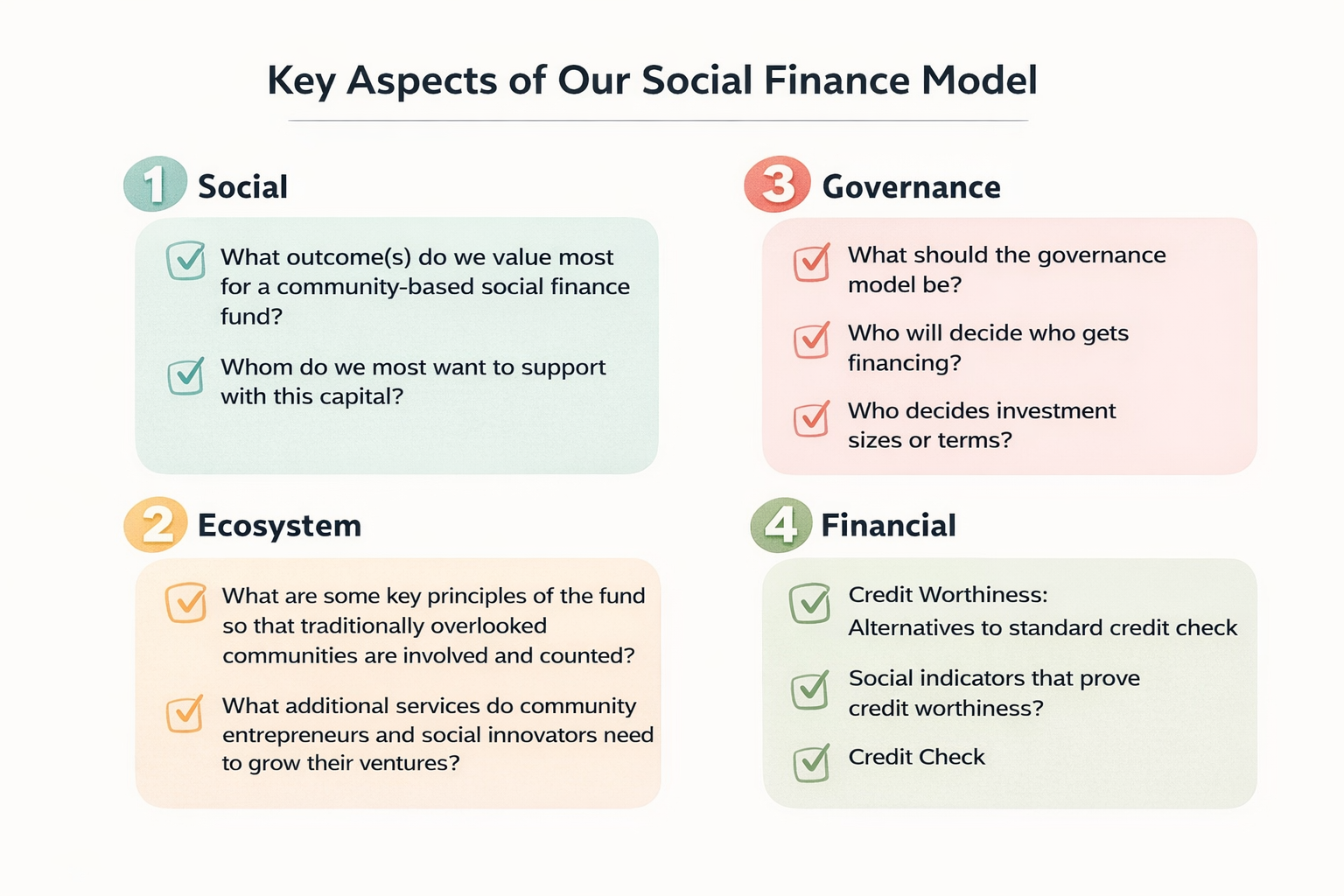
Key aspects of our social finance model infographic
In development

What we’re building

We are developing a social finance approach that balances community priorities with practical fund design. Our development work focuses on four connected areas:

  • Social: the outcomes we value most, and who we most want to support.
  • Ecosystem: the supports entrepreneurs and innovators need to grow.
  • Governance: who decides, and how decisions are made fairly.
  • Financial: responsible assessments and alternatives to standard credit checks.

This model is being refined through community sessions and partner conversations.

How we’ll get there

We’re building the fund with community, not just for community. Through a co-design process, we’re hosting guided sessions to shape the fund’s principles, decision-making, and financing approach—based on lived experience, local needs, and real-world constraints.

Group discussion in a community session

Examples that inspire our approach

Example

Community Bonds (YWCA Toronto)

A community bond approach helped finance housing, supported affordability through rent supplements, and used building income to repay the bond over time.

Example

Social enterprise growth (Rhythm Rhythm)

A social enterprise used program revenue (workshops/training) to repay investment while expanding its reach and offerings.

Want to connect now? Use Get involved to reach us.